
5 Questions Every Shipowner Should Ask About Their Reporting System

Most vessels submit reports. Far fewer fleets operate within a true reporting system.

For many shipowners, “digital reporting” still means spreadsheets, emails, PDFs, and a patchwork of manual routines. These tools may feel familiar, but they were never designed to cope with today’s regulatory complexity or tomorrow’s data expectations.
As requirements such as MRV, DCS, CII, EU ETS, and ESG reporting continue to expand, the real challenge is no longer whether data is collected, but whether it is structured, reliable, and usable.
Before investing in optimization tools, advanced analytics, or performance models, it is worth stepping back and asking five fundamental questions.
Is reporting truly standardized across the fleet?
In many organizations, each vessel reports in its own way. Formats differ. Terminology varies. Some parameters are mandatory on one vessel and optional on another. The result is predictable: inconsistent data and limited comparability.
A true reporting system establishes a common structure through unified templates, clearly defined data fields, and consistent naming conventions and units. Standardization is not about control for its own sake. It is about creating a shared language across the fleet.
Without this foundation, automation and meaningful analysis become difficult to achieve. If reports cannot be compared vessel to vessel, they cannot support informed decisions.
Can we trust the data we receive?
Manual data entry will always involve a degree of human error. What matters is how well the system manages it.
Typographical mistakes, missing values, and unrealistic figures are common in manual processes. A modern reporting system addresses this by applying validation at the point of entry, using plausibility checks, mandatory fields, and immediate feedback when values fall outside expected ranges.
The objective is not perfection. The objective is controlled quality. When users trust the data, they spend less time correcting numbers and more time using them.
Is our data audit-ready at any time?
For many operators, audit preparation still means searching through inboxes, shared folders, and old spreadsheets. This approach is both risky and inefficient.
Audit-ready reporting means that data is stored centrally, changes are traceable, and every record is time-stamped with a clear user history. When this structure is built into the system from the start, audits become a routine process rather than a stressful event.
Compliance should be continuous, not seasonal.
Are we reusing the same data for multiple purposes?
Fuel consumption, distance sailed, and voyage data are often entered multiple times into different systems to satisfy different regulations and internal reports. This creates duplicate work, higher risk of inconsistencies, and conflicting figures across submissions.
A mature reporting setup captures data once and reuses it many times, for MRV, DCS, CII, EU ETS, internal KPIs, and ESG reporting. One dataset. Many outputs.
This approach reduces workload while improving consistency and confidence in the numbers.
Does our reporting system support decisions, or only compliance?
If reporting only produces files for authorities, much of its potential is wasted.
A true reporting system also supports operations and management by enabling fleet and vessel benchmarking, trend analysis over time, and early identification of performance deviations. When reporting data becomes visible and accessible, it turns into a practical decision-support tool.
From Reporting Burden to Strategic Asset
Regulatory requirements will continue to increase. Manual and fragmented processes do not scale.
Shipowners who establish a strong digital reporting foundation today are better positioned to meet future regulations, improve operational performance, and respond to growing transparency demands from charterers, financiers, and regulators.
Before you optimize anything, make sure your reporting foundation is fit for purpose.

The Cost of Untrusted Data
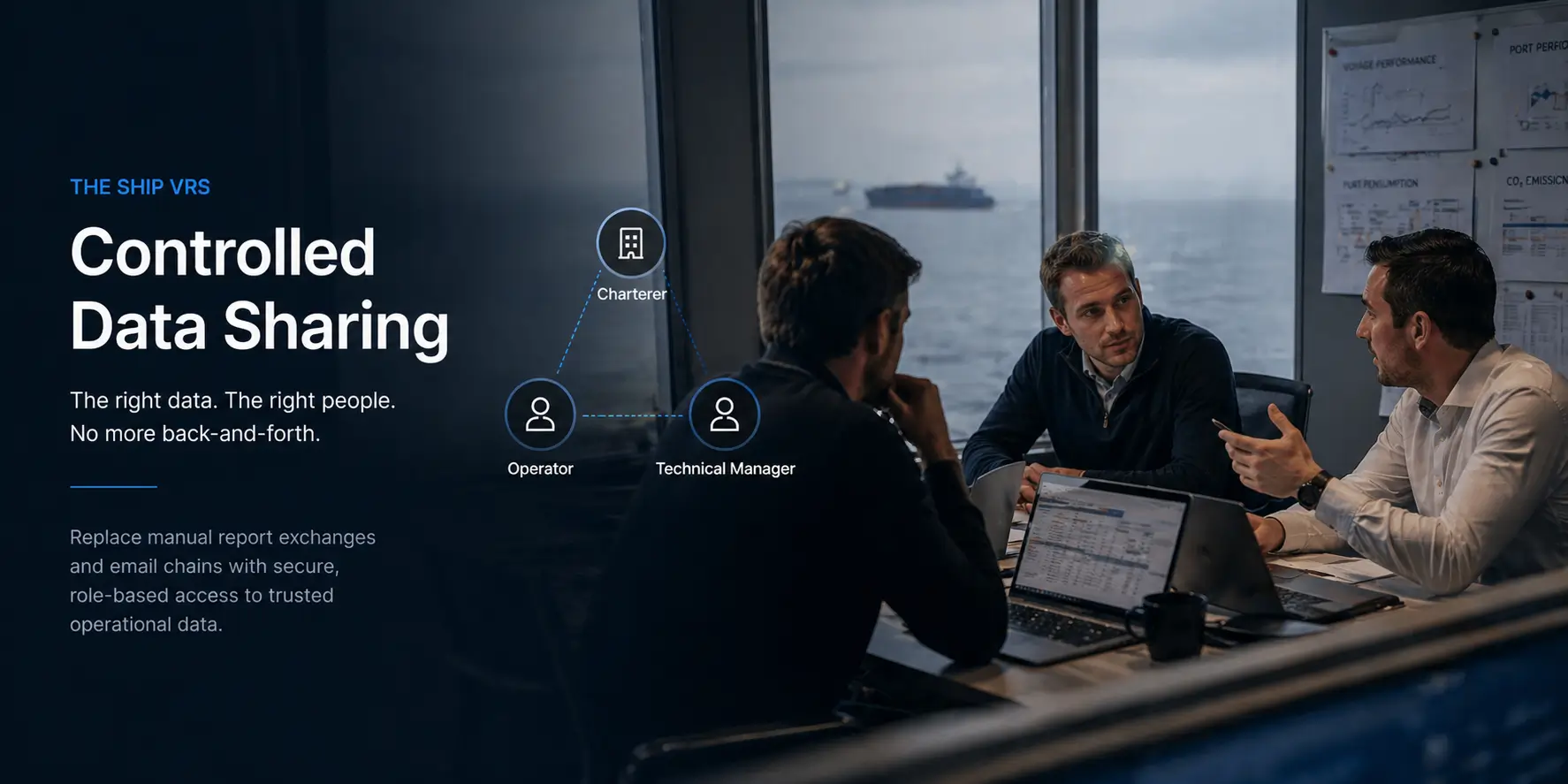
Introducing Controlled Data Sharing
5 Questions Every Shipowner Should Ask About Their Reporting System
Get in touch
Have any questions about The Ship VRS? Don't hesitate to reach out to our sales team.